

Heart Palpitations: Symptoms, Causes & Treatment
Heart palpitations are sensations where you feel your heart beating irregularly, too fast, or too slow. They can be caused by stress, anxiety, physical exertion, or underlying heart conditions like arrhythmias. While often harmless, frequent or severe palpitations may signal a more serious health issue. Board-certified Dr. Kaushal Tamboli, MD, FACC, and the team at Cardiovascular Medical Associates are here to help diagnose the cause and provide the appropriate treatment to manage your heart health effectively. For more information, contact us or book an appointment online. We are conveniently located at 8317 Davis St, Downey, CA 90241.
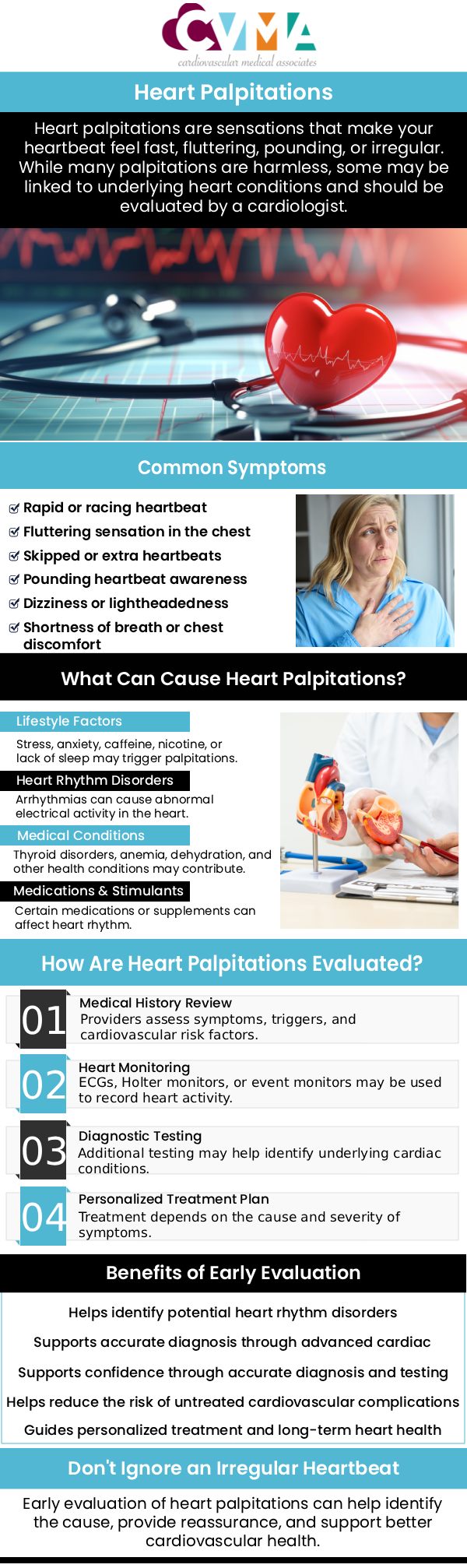
Table of Contents:
What are heart palpitations?
What are the causes of heart palpitations?
What are the signs and symptoms of heart palpitations?
What are the risk factors of heart palpitations?
How are heart palpitations diagnosed?
What are possible treatments for heart palpitations?
Are there preventive steps or measures to avoid heart palpitations?
What are the risks if heart palpitations are left untreated?
Understanding Heart Palpitations: Dr. Kaushal Tamboli and Our Team at Cardiovascular Medical Associates, Downey, CA
Heart palpitations are abnormal sensations that make you feel like your heart is beating too quickly, too slowly, or irregularly. You may notice your heart pounding, fluttering, or skipping beats, and these sensations can occur in your chest, throat, or neck. While palpitations are often harmless, they can be unsettling and cause anxiety or discomfort. They can occur without warning and may happen during rest, after exercise, or in response to emotional stress.
In many cases, heart palpitations are temporary and go away on their own. They can be triggered by factors like stress, caffeine, exercise, or hormonal changes. However, if palpitations are frequent, severe, or accompanied by other symptoms such as chest pain, shortness of breath, or dizziness, they may indicate an underlying heart condition that requires medical attention. It’s important to consult a healthcare provider if you’re concerned about your heart palpitations to ensure proper evaluation and treatment.
Heart palpitations can be triggered by various factors, including:
● Emotional stress or anxiety: Anxiety, panic attacks, and stress can cause your heart to race or beat irregularly.
● Caffeine and stimulants: Excessive consumption of caffeine, nicotine, or alcohol can stimulate the heart, leading to palpitations.
● Physical exertion: Intense physical activity or overexertion can lead to heart palpitations as the heart works harder to supply oxygen to muscles.
● Hormonal changes: Pregnancy, menstruation, or menopause can trigger palpitations due to fluctuations in hormone levels.
● Health conditions: Thyroid problems, anemia, dehydration, low blood sugar, and heart-related issues like arrhythmias or heart disease can cause palpitations.
● Medications: Certain medications can have side effects that affect the heart’s rhythm.
The symptoms of heart palpitations can vary, but they may include:
● Pounding or fluttering sensation: A feeling of your heart pounding in your chest, throat, or neck.
● Racing heart: A fast heartbeat, especially at rest, that may feel like it’s working too hard.
● Irregular heartbeat: A sensation of skipped beats or irregular rhythms.
● Shortness of breath: Difficulty breathing or feeling winded when palpitations occur.
● Dizziness or lightheadedness: Feeling faint or dizzy, particularly if the heart’s rhythm is disrupted.
● Chest discomfort: Mild tightness, pressure, or discomfort in the chest that can sometimes be more severe.
● Fatigue: Feeling unusually tired or weak due to persistent palpitations.
While many palpitations are harmless, it is essential to seek medical help if they occur frequently or are accompanied by chest pain or shortness of breath.
Several factors can increase the likelihood of experiencing heart palpitations, including:
● Stress, anxiety, and panic: These emotional states can trigger palpitations.
● Caffeine and stimulant use: Excessive intake of stimulants like caffeine or nicotine.
● Physical exertion: Strenuous activity or over-exertion without proper rest.
● Hormonal changes: Changes during pregnancy, menstruation, or menopause.
● Medical conditions: Health issues such as thyroid imbalances, anemia, dehydration, or heart conditions like arrhythmias and heart disease.
● Medications: Some drugs and stimulants can affect the heart’s rhythm.
● Age and genetics: Older individuals or those with a family history of heart issues may be at higher risk.
A proper diagnosis begins with a thorough medical history and physical examination. Your doctor will ask about your symptoms, their triggers, and their frequency. Tests may include:
● Electrocardiogram (ECG): A test to measure the electrical activity of your heart.
● Holter monitor: A portable ECG device that records heart activity over 24-48 hours.
● Event monitor: Used for longer periods (up to 30 days) to capture palpitations when they occur.
● Echocardiogram: An ultrasound that provides images of your heart’s structure and function.
● Stress test: Evaluates how your heart performs under physical exertion.
● Blood tests: These may be used to check for thyroid problems, anemia, or electrolyte imbalances.
The treatment for heart palpitations depends on the underlying cause:
● Stress management: Techniques like meditation, yoga, or relaxation exercises can help alleviate anxiety-induced palpitations.
● Limiting stimulants: Reducing the intake of caffeine, nicotine, and alcohol can prevent palpitations triggered by these substances.
● Medications: If palpitations are caused by a medical condition, your doctor may prescribe medications to regulate the heart’s rhythm.
● Cardioversion or ablation: In cases of serious arrhythmias, procedures like cardioversion (to restore normal rhythm) or catheter ablation (to destroy abnormal tissue causing irregular heartbeats) may be necessary.
To help prevent palpitations, consider the following:
● Reduce stress: Practice relaxation techniques to manage stress and anxiety.
● Limit stimulants: Cut back on caffeine, nicotine, and alcohol.
● Exercise regularly: Stay active to improve cardiovascular health, but avoid overexertion.
● Stay hydrated: Drink plenty of water to avoid dehydration, which can affect heart function.
● Eat a balanced diet: A healthy diet can support overall heart health and prevent underlying conditions that may cause palpitations.
● Sleep well: Ensure you get enough rest to reduce stress and support heart health.
● Manage chronic conditions: Control health issues like high blood pressure, thyroid disorders, or diabetes that may contribute to palpitations.
If left untreated, heart palpitations can worsen and may indicate underlying issues like arrhythmias, heart disease, or other serious conditions. Untreated, palpitations can increase the risk of:
● Stroke: Certain arrhythmias can lead to blood clots, which may result in a stroke.
● Heart failure: Chronic palpitations can strain the heart and lead to heart failure.
● Fainting: Persistent palpitations can cause dizziness or fainting, particularly if the heart is not pumping effectively.
● Decreased quality of life: Palpitations can interfere with daily activities and lead to fatigue or discomfort.
If you’re experiencing frequent or severe palpitations, it’s essential to consult with a healthcare provider for evaluation and management.
At Cardiovascular Medical Associates in Downey, CA, we understand that heart palpitations can be unsettling. These sensations, where you may feel your heart pounding or fluttering, are often harmless but can sometimes signal underlying health issues. Dr. Kaushal Tamboli and our dedicated team specialize in diagnosing and treating heart conditions, including palpitations, to help you regain peace of mind and ensure your heart is functioning at its best. Whether you experience palpitations due to stress, anxiety, or a more serious condition like arrhythmia, we are here to provide care tailored to your needs.
Our clinic in Downey offers comprehensive testing, including EKGs, stress tests, and echocardiograms, to pinpoint the cause of your heart palpitations. If you’re dealing with persistent or troubling symptoms, it’s important to seek professional evaluation. Dr. Tamboli’s experience and commitment to personalized care ensure that you receive the best treatment plan suited to your unique health profile. For top-notch cardiovascular care in Downey, CA, contact us at Cardiovascular Medical Associates today. We are here to help you understand your symptoms and guide you on the path to optimal heart health. For more information, contact us or book an appointment online. We are conveniently located at 8317 Davis St, Downey, CA 90241. We serve patients from Downey CA, Norwalk CA, Lynwood CA, Cerritos CA, Lakewood CA, Whittier CA, and surrounding areas.
Check Out Our 5 Star Reviews



 Send Text
 How May I Help You?