

What Causes Chest Pain and When to Consult a Heart Doctor
Chest pain can stem from a variety of causes, ranging from minor issues like indigestion to serious heart conditions such as a heart attack or arrhythmia. It’s important to recognize the severity and accompanying symptoms to determine when medical attention is needed. If chest pain persists or is accompanied by shortness of breath, dizziness, or sweating, consulting a heart doctor is essential. At Cardiovascular Medical Associates in Downey, CA, board-certified Dr. Kaushal Tamboli, MD, FACC and our cardiologists are here to provide thorough evaluation and care for chest pain. For more information, contact us or book an appointment online. We are conveniently located at 8317 Davis St, Downey, CA 90241.
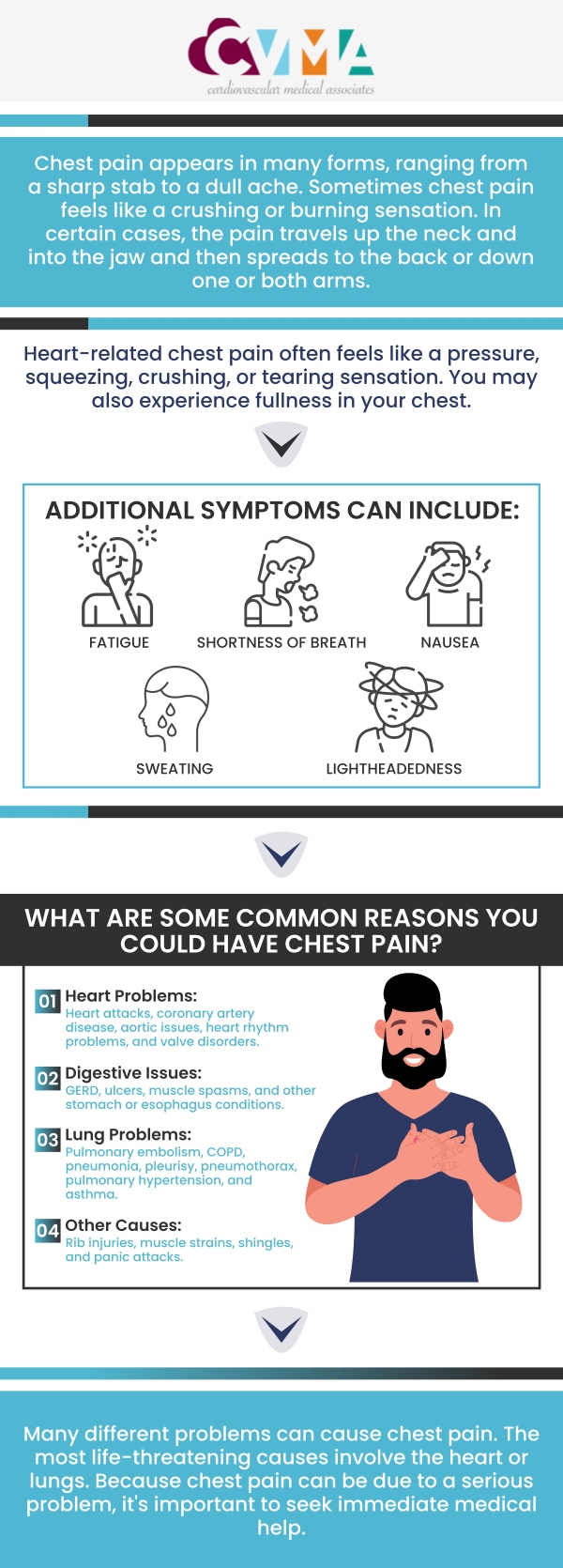
Table of Contents:
How do I know if my chest pain is serious?
When should I seek medical help for my chest pain?
What tests might a heart doctor perform to evaluate chest pain?
Is chest pain a sign of a heart attack?
Don’t Ignore Chest Pain: Consult Our Board-Certified Cardiologists at Cardiovascular Medical Associates in Downey, CA
Chest pain can vary greatly in intensity, duration, and type, and while not all chest pain signals a serious health issue, it should never be ignored. To determine whether your chest pain is serious, consider the following factors:
1. Pain Characteristics: Serious chest pain is often described as sharp, crushing, or pressure-like. It may feel like an intense, tight sensation that radiates to your arm, jaw, back, or stomach. If the pain comes on suddenly, is intense, or doesn’t go away after a few minutes, it could be a sign of a heart attack or another serious condition.
2. Accompanying Symptoms: If chest pain is accompanied by other symptoms like shortness of breath, dizziness, nausea, cold sweats, or a feeling of lightheadedness, it may indicate a heart-related problem such as a heart attack. Chest pain that occurs alongside these symptoms requires immediate medical attention.
3. Risk Factors: If you have risk factors for heart disease, such as high blood pressure, diabetes, smoking, obesity, or a family history of heart disease, any chest pain should be taken seriously. Even if the pain seems mild, these risk factors increase the likelihood that it could be heart-related.
If you’re unsure about the cause of your chest pain or if it seems serious, it is always better to err on the side of caution. Call 911 or seek emergency medical help immediately to ensure timely evaluation and care. Early intervention can make a significant difference in treating potentially life-threatening conditions like heart attacks.
You should seek medical help immediately if your chest pain is accompanied by symptoms such as difficulty breathing, cold sweats, nausea, lightheadedness, or if it lasts for more than a few minutes. These could be signs of a heart attack or other serious heart conditions that require urgent intervention. It’s also important to consult a doctor if you have risk factors such as a family history of heart disease, hypertension, diabetes, or if the chest pain follows physical exertion or stressful events.
If you are in Downey, CA, Cardiovascular Medical Associates is your go-to clinic for comprehensive chest pain evaluation. Dr. Kaushal Tamboli and our cardiology team are here to assess your symptoms, perform necessary tests, and guide you through the next steps in treatment. Don’t hesitate to seek help, as early diagnosis can significantly improve outcomes for serious cardiac conditions.
When evaluating chest pain, a heart doctor, such as a cardiologist, will typically begin by reviewing your medical history, symptoms, and risk factors. From there, they may perform a series of diagnostic tests to determine the underlying cause. Common tests that may be used include:
● Electrocardiogram: This test measures the electrical activity of the heart and can help identify irregular heart rhythms, signs of a previous heart attack, or other heart-related issues.
● Echocardiogram: An ultrasound of the heart that provides images of its structure and function, allowing doctors to assess whether there are any abnormalities in the heart’s valves, chambers, or pumping ability.
● Stress Test: This test monitors how the heart performs during physical activity or under stress, helping doctors detect any issues with blood flow to the heart.
● Chest X-ray: A simple imaging test to check for lung conditions, infections, or other issues that might cause chest pain.
● Cardiac Catheterization: If further investigation is needed, this procedure involves inserting a catheter into a blood vessel to examine the coronary arteries and assess any blockages or narrowing.
These tests allow doctors to accurately diagnose the cause of chest pain, whether it is related to a cardiovascular condition or something else. Based on the results, your doctor will develop an appropriate treatment plan tailored to your needs.
Chest pain can be a sign of a heart attack, but it doesn’t always mean that’s the case. Heart attacks typically cause a sharp, crushing pain or a feeling of tightness in the chest. This pain may radiate to the arms, jaw, neck, back, or stomach and is often accompanied by other symptoms, such as shortness of breath, nausea, dizziness, and cold sweats. However, chest pain can also be caused by a variety of non-cardiac conditions, such as acid reflux, muscle strain, or anxiety.
It’s important to remember that not all chest pain is related to a heart attack, but any new or unexplained chest pain should be taken seriously. If the pain is severe, lasts for more than a few minutes, or is accompanied by other concerning symptoms, seeking immediate medical help is crucial. Early intervention can make a significant difference in preventing further complications and ensuring a timely diagnosis. If you’re experiencing chest pain, don’t hesitate to call 911 or visit a healthcare provider.
Chest pain is not something to take lightly, as it can be a sign of a serious underlying condition, especially if it persists or worsens. Conditions like heart attacks, arrhythmias, or aortic dissection can present as chest pain, making it crucial to seek medical attention immediately. At Cardiovascular Medical Associates in Downey, CA, we emphasize the importance of prompt evaluation and diagnosis when it comes to chest pain. Dr. Kaushal Tamboli and our team of board-certified cardiologists are equipped with the expertise and advanced diagnostic tools to determine the cause of your chest pain and provide the necessary treatment.
Ignoring chest pain or delaying treatment can lead to severe complications, including heart damage or life-threatening situations. At Cardiovascular Medical Associates, we understand the urgency of chest pain and offer comprehensive care to address your symptoms quickly and effectively. Whether your chest pain is related to a cardiovascular issue or another condition, Dr. Kaushal Tamboli and our cardiology team are here to guide you every step of the way, ensuring the best possible care and outcome for your health. For more information, contact us or book an appointment online. We are conveniently located at 8317 Davis St, Downey, CA 90241. We serve patients from Downey CA, Norwalk CA, Lynwood CA, Cerritos CA, Lakewood CA, Whittier CA, and surrounding areas.
Check Out Our 5 Star Reviews




 Send Text
 How May I Help You?