

What Does an Echocardiogram Show?
An echocardiogram shows detailed images of the heart’s structure, including the size, shape, and movement of the chambers, while also evaluating how well the heart valves open and close to detect conditions such as stenosis or regurgitation, and it assesses blood flow and pumping efficiency to identify areas of reduced heart function, helping diagnose and monitor a wide range of cardiovascular conditions in real time at Cardiovascular Medical Associates in Downey, CA, Board-Certified Dr. Kaushal Tamboli, MD, FACC, and our team of cardiologists. For more information, contact us or book an appointment online. We are conveniently located at 8317 Davis St, Downey, CA 90241.
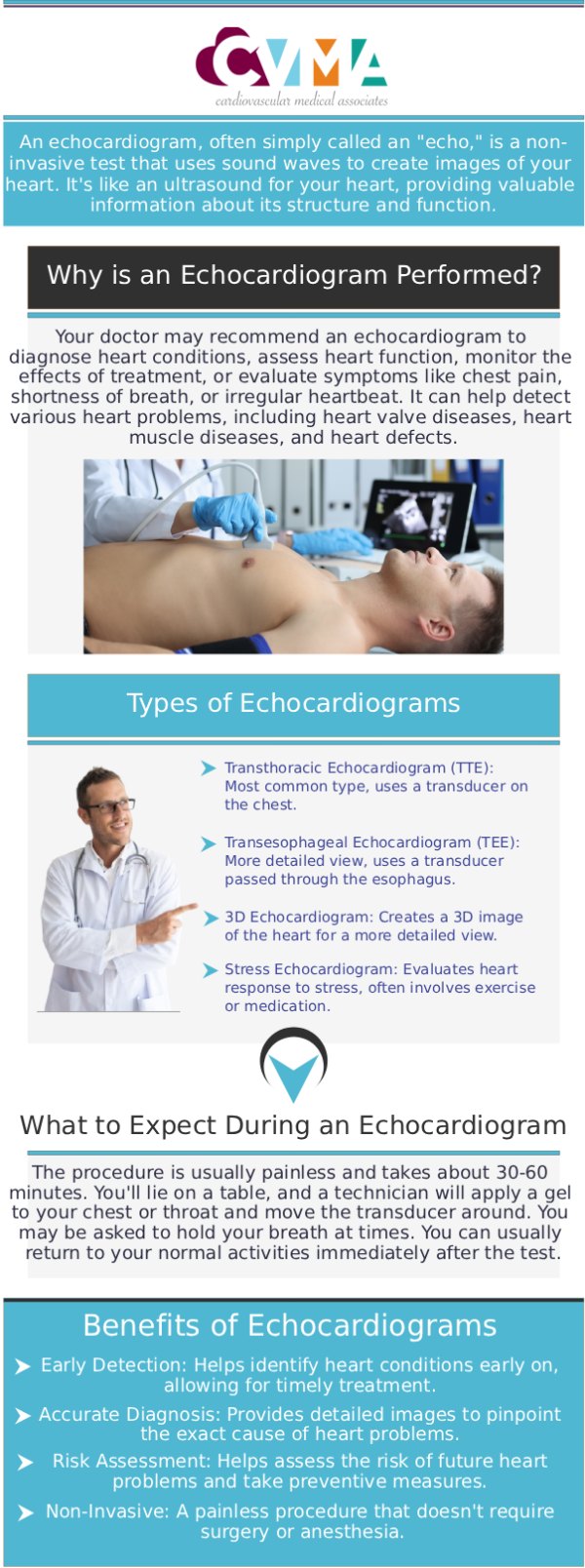
Table of Contents:
What does an echocardiogram show about heart structure?
How does an echocardiogram evaluate heart valve function?
What does an echocardiogram reveal about heart chamber size and function?
How reliable is an echocardiogram for detecting heart problems?
How Echocardiograms Evaluate Heart Structure and Function at Cardiovascular Medical Associates in Downey, CA
An echocardiogram provides detailed images of the heart’s overall structure, allowing cardiologists to evaluate the size, shape, and integrity of the heart muscle. It helps identify abnormalities such as thickened heart walls, enlarged chambers, or congenital structural defects that may affect normal heart function. This imaging test gives real-time visualization of how the heart is built and how it moves during each heartbeat.
It also helps detect conditions like cardiomyopathy or structural damage caused by long-term high blood pressure or previous heart attacks. By assessing the heart’s anatomy, clinicians can better understand the root cause of symptoms such as shortness of breath, chest discomfort, or fatigue. At Cardiovascular Medical Associates in Downey, CA, echocardiography is used as a key diagnostic tool to evaluate structural heart health.
An echocardiogram allows cardiologists to closely examine how the heart valves open and close with each heartbeat. It helps detect valve abnormalities such as stenosis, where valves become narrowed, or regurgitation, where blood leaks backward instead of flowing forward efficiently. These issues can significantly affect blood circulation and overall heart performance.
Doppler imaging, often used during the test, measures blood flow across the valves to determine how well they are functioning. This helps identify whether valves are restricting blood flow or causing inefficient circulation. Early detection of valve disease is essential for preventing complications such as heart failure or worsening cardiac symptoms.
An echocardiogram provides precise measurements of the heart’s chambers, including the atria and ventricles. It helps determine whether any chambers are enlarged or thickened, which may indicate underlying conditions such as hypertension, valve disease, or cardiomyopathy. These structural changes can affect the heart’s ability to pump blood effectively.
In addition to size, the test evaluates how well each chamber is functioning, particularly the left ventricle, which is responsible for pumping oxygen-rich blood to the body. The ejection fraction, a key measurement obtained during the exam, shows how efficiently the heart is pumping with each beat. Abnormal results can indicate weakened heart function or heart failure.
An echocardiogram is considered one of the most reliable and widely used non-invasive tests for evaluating heart structure and function. It provides real-time imaging that allows cardiologists to detect a wide range of conditions, including valve disease, heart failure, congenital defects, and fluid around the heart. Its accuracy makes it an essential first-line diagnostic tool in cardiology.
However, while highly effective, it is often used alongside other tests such as EKGs, stress testing, or cardiac imaging for a complete evaluation. This combination ensures a more comprehensive understanding of heart health. At Cardiovascular Medical Associates in Downey, CA, echocardiography is integrated into a full diagnostic approach to ensure accurate detection and treatment planning.
An echocardiogram is a powerful diagnostic tool that uses sound waves to create real-time images of the heart, allowing detailed evaluation of both structure and function. It helps cardiologists assess chamber size, wall thickness, valve performance, and overall pumping ability. This information is essential for diagnosing a wide range of cardiovascular conditions and guiding effective treatment decisions.
By visualizing how blood flows through the heart and how each chamber and valve operates, echocardiography provides critical insight into overall cardiac performance. It can detect early signs of heart disease, monitor existing conditions, and evaluate treatment effectiveness over time. This makes it a cornerstone of modern cardiovascular care.
At Cardiovascular Medical Associates, Board-Certified Cardiologist Kaushal Tamboli, MD, FACC and the cardiology team use echocardiograms as part of a comprehensive evaluation process for patients with suspected or known heart conditions. The goal is to identify problems early and ensure timely intervention.
Echocardiograms are especially useful in assessing symptoms such as shortness of breath, chest pain, fatigue, or irregular heartbeat. These symptoms may be linked to underlying structural or functional heart issues that require careful evaluation. The test provides clarity that helps guide further diagnostic steps or treatment plans.
The procedure itself is safe, non-invasive, and typically completed within a short appointment time. Patients remain comfortable throughout the test while real-time images are captured and reviewed. There is no radiation exposure, making it a preferred diagnostic method for many cardiac evaluations.
Once the test is completed, the cardiologist analyzes the results to determine whether the heart is functioning normally or if further intervention is needed. Findings may lead to medication adjustments, lifestyle recommendations, or additional testing depending on the severity of the condition.
Echocardiography also plays an important role in long-term monitoring of chronic heart conditions such as heart failure, valve disease, or cardiomyopathy. Regular imaging helps track changes in heart function and ensures that treatment plans remain effective over time.
At Cardiovascular Medical Associates in Downey, CA, patients benefit from advanced echocardiographic evaluation combined with personalized cardiovascular care. Dr. Kaushal Tamboli, MD, FACC, and the cardiology team focus on accurate diagnosis, early detection, and ongoing heart health management for patients throughout Downey and surrounding communities. For more information, contact us or book an appointment online. We are conveniently located at 8317 Davis St, Downey, CA 90241. We serve patients from Downey CA, Norwalk CA, Lynwood CA, Cerritos CA, Lakewood CA, Whittier CA, and surrounding areas.
Check Out Our 5 Star Reviews





 Send Text
 How May I Help You?