

What Is an Echocardiogram and When Do You Need One?
At Cardiovascular Medical Associates, Dr. Kaushal Tamboli, MD, helps patients understand that an echocardiogram is a noninvasive heart test that uses sound waves to create images of the heart’s structure, valves, and blood flow. It may be recommended for symptoms like chest pain, shortness of breath, palpitations, dizziness, or a heart murmur. Early testing can help detect heart problems and guide the right treatment plan. For more information, contact us or book an appointment online. We are conveniently located at 8317 Davis St, Downey, CA 90241.
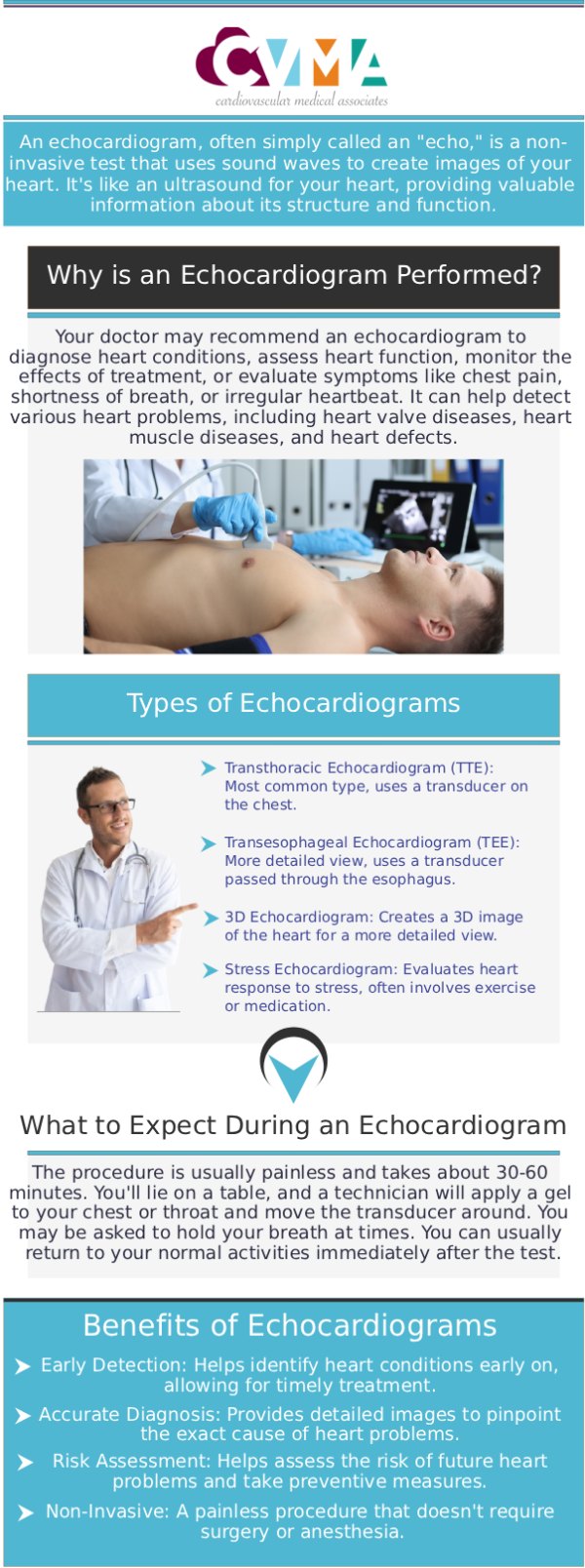
Table of Contents:
What does an echocardiogram show about your heart?
How does an echocardiogram work?
What symptoms indicate you may need an echocardiogram?
Can an echocardiogram detect heart disease early?
Do I need a referral for an echocardiogram at Cardiovascular Medical Associates?
At Cardiovascular Medical Associates, an echocardiogram is a simple heart imaging test that shows how your heart looks and how well it works. It uses sound waves to create moving pictures of the heart, which helps doctors see the heart chambers, heart valves, heart muscle, and blood flow. This makes it one of the most useful noninvasive tests in cardiology.
An echocardiogram can show whether your heart is pumping normally or if it is weaker than expected. It can also reveal if the heart chambers are enlarged, if the valves are too narrow or leaky, or if fluid is collecting around the heart. At Cardiovascular Medical Associates, this test is often used to better understand symptoms like chest discomfort, shortness of breath, palpitations, fatigue, or swelling in the legs.
Another major benefit is that an echocardiogram can help identify signs of heart failure, valve disease, past heart damage, congenital heart problems, or pressure changes inside the heart. Because the images move in real time, doctors can see how the heart beats with each contraction.
At Cardiovascular Medical Associates, an echocardiogram is valued because it gives important information without surgery or a long recovery. It helps guide diagnosis, treatment planning, and follow-up care so patients can better understand their heart health and next steps.
At Cardiovascular Medical Associates, an echocardiogram works by using high-frequency sound waves, also called ultrasound waves, to create live images of your heart. A small handheld device called a transducer is placed on the chest with gel. The gel helps the sound waves travel through the skin. These sound waves bounce off the heart structures and return to the machine, which then turns them into moving pictures on a screen.
This test does not use surgery and usually does not use radiation. That is one reason an echocardiogram is such a common heart test at Cardiovascular Medical Associates. It allows the care team to see the size and shape of the heart, how the valves open and close, and how strongly the heart pumps blood.
In many cases, Doppler technology is also used during the exam. Doppler helps measure the direction and speed of blood flow through the heart and valves. This can help detect leaky valves, narrowed valves, or abnormal flow patterns. The test is usually painless and often takes less than an hour, depending on the type of study.
At Cardiovascular Medical Associates, patients often appreciate that the exam is straightforward and noninvasive. The information from the test helps doctors understand symptoms and decide whether more evaluation or treatment is needed for better heart care.
At Cardiovascular Medical Associates, doctors may recommend an echocardiogram when symptoms suggest that the heart may not be working normally. One of the most common symptoms is shortness of breath, especially during activity or when lying down. Another common reason is chest pain or pressure, which may need heart testing to rule out structural or valve-related problems.
Other symptoms that may lead to an echocardiogram include heart palpitations, dizziness, fainting, swelling in the legs or ankles, unusual fatigue, or a new heart murmur. In some patients, the test is ordered after an abnormal EKG, high blood pressure concerns, or signs of possible heart failure. At Cardiovascular Medical Associates, an echocardiogram can help explain whether these symptoms are linked to weak heart function, valve disease, fluid around the heart, or another heart condition.
At Cardiovascular Medical Associates, our team’s goal is to match the right heart test to the patient’s symptoms so treatment can begin early and care can stay focused, timely, and effective.
Yes, at Cardiovascular Medical Associates, an echocardiogram can help detect certain types of heart disease early, sometimes before symptoms become severe. This is especially true for problems involving the heart valves, heart muscle, pumping strength, chamber size, and fluid around the heart. If a person has unexplained fatigue, shortness of breath, swelling, or an abnormal exam finding, an echocardiogram may reveal early structural changes that need attention.
For example, this test can find a weakened heart muscle, enlarged chambers, thickened heart walls, valve narrowing, or valve leakage before the condition progresses. It can also help monitor patients who already have risk factors such as high blood pressure, diabetes, previous heart problems, or a family history of heart disease. At Cardiovascular Medical Associates, this kind of early imaging can support faster diagnosis and better treatment planning.
However, it is important to keep expectations realistic. An echocardiogram is excellent for showing structure and function, but it is not the only test used in cardiology. It does not directly show every blocked artery. Other tests may be needed depending on symptoms and risk factors.
At Cardiovascular Medical Associates, whether you need a referral for an echocardiogram often depends on the clinic’s scheduling policy, your insurance plan, and the reason for the test. In many cases, patients are referred for an echocardiogram by a primary care doctor, cardiologist, urgent care provider, or another specialist who wants more information about heart symptoms. That referral can also help document the medical need for insurance approval.
The most accurate step is to contact Cardiovascular Medical Associates directly and ask how they handle new patient appointments, test orders, and insurance requirements. This is especially important if you have symptoms such as chest pain, shortness of breath, palpitations, or swelling.
If you are asking about a specific physician like Dr. Kaushal Tamboli, MD, at the practice, only our team can confirm that provider’s current scheduling process. In general, Dr. Tamboli may first review your symptoms and medical history before deciding which type of echocardiogram is best. If you want the exact next step, ask Cardiovascular Medical Associates whether a consultation, outside referral, or direct internal order is required.
For more information, contact us or book an appointment online. We are conveniently located at 8317 Davis St, Downey, CA 90241. We serve patients from Downey CA, Norwalk CA, Lynwood CA, Cerritos CA, Lakewood CA, Whittier CA, and surrounding areas.
Check Out Our 5 Star Reviews





 Send Text
 How May I Help You?