

Stress Echocardiogram vs Regular Echocardiogram
At Cardiovascular Medical Associates, Dr. Kaushal Tamboli, MD, helps patients understand that a regular echocardiogram shows how the heart looks and functions while at rest, while a stress echocardiogram checks how the heart performs during physical activity or medication-induced stress. Both tests use ultrasound images, but they help detect different heart concerns based on symptoms and risk factors. Knowing the difference can help patients understand which heart test may be right for their condition. For more information, contact us or book an appointment online. We are conveniently located at 8317 Davis St, Downey, CA 90241.
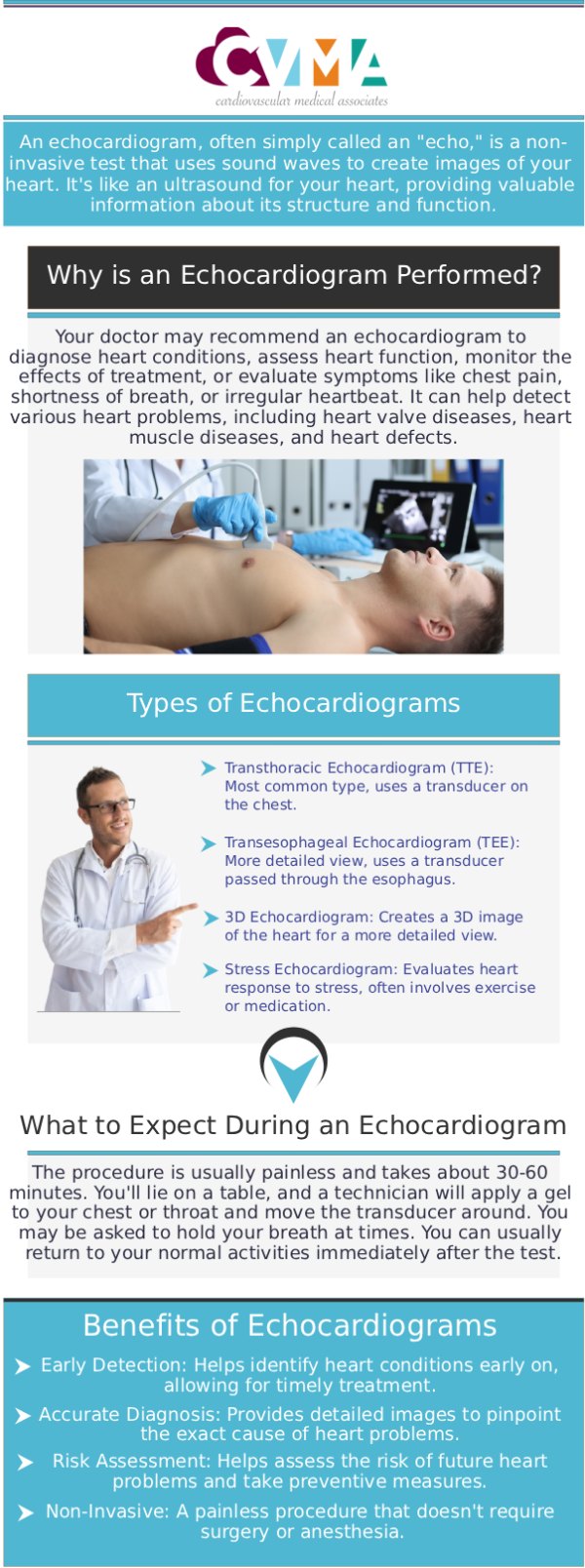
Table of Contents:
What is the difference between a stress echocardiogram and a regular echocardiogram?
What conditions does a stress echocardiogram detect that a regular one cannot?
How long does a stress echocardiogram take vs a regular echocardiogram?
How does Dr. Kaushal Tamboli decide between a stress and a resting echocardiogram?
At Cardiovascular Medical Associates, the main difference between a stress echocardiogram and a regular echocardiogram is when and how the heart is being tested. A regular echocardiogram, also called a resting echocardiogram, looks at the heart while your body is calm and at rest. It uses ultrasound images to show the heart chambers, valves, pumping function, and blood flow. This test helps doctors see the structure of the heart and whether it is working normally during normal conditions.
A stress echocardiogram adds another step. The heart is imaged at rest and then again after exercise, or sometimes after medication that makes the heart work harder. This helps the care team see how the heart performs under stress. At Cardiovascular Medical Associates, this test is often used when symptoms happen during activity, such as chest pain, shortness of breath, or unusual fatigue.
A regular echocardiogram is best for checking heart size, valve disease, pumping strength, and fluid around the heart. A stress echocardiogram is more focused on whether the heart gets enough blood flow when demand increases. In simple terms, one shows the heart at rest, while the other shows how the heart responds when it is challenged.
At Cardiovascular Medical Associates, a regular echocardiogram is very helpful for finding problems with the heart muscle, heart valves, chamber size, and overall pumping strength, but it may not always show what happens when the heart is working harder. That is where a stress echocardiogram becomes especially useful. A stress echocardiogram can help detect signs of reduced blood flow to the heart muscle during activity, which may suggest coronary artery disease.
This is important because some people feel fine while resting, and their regular echocardiogram may look normal. But when the heart has to pump harder during exercise or medication-induced stress, areas with reduced blood supply may not contract as strongly. At Cardiovascular Medical Associates, this can help reveal problems that are not obvious on a resting study alone.
A stress echocardiogram may also help evaluate exercise-related chest pain, shortness of breath, reduced exercise tolerance, suspected ischemia, and how the heart responds under strain. It can sometimes help assess how serious a known blockage may be and whether symptoms are likely heart-related.
A regular echocardiogram still plays an important role, but it does not always uncover exercise-triggered heart problems. At Cardiovascular Medical Associates, a stress echocardiogram is often chosen when symptoms happen during exertion or when doctors need more information about possible reduced blood flow that a resting test cannot fully show.
At Cardiovascular Medical Associates, a regular echocardiogram is usually shorter and simpler than a stress echocardiogram. A regular echocardiogram often takes about 30 to 60 minutes, depending on how many images are needed and how easy it is to capture clear views of the heart. During this test, you lie on an exam table while a technician uses ultrasound gel and a handheld probe to record images. There is no exercise portion, so the process is generally steady and straightforward.
A stress echocardiogram usually takes longer because it includes more than one stage. First, images are taken while you are at rest. Then you exercise on a treadmill or receive medication to make the heart work harder. After that, more images are taken quickly so our expert team can compare the heart at rest and under stress. Because of these added steps, a stress echocardiogram often takes about 45 to 90 minutes, though timing can vary by patient and clinic process.
At Cardiovascular Medical Associates, the exact timing may depend on your heart rate response, mobility, preparation steps, and whether extra monitoring is needed. In simple terms, a regular echocardiogram is usually the faster option, while a stress echocardiogram takes longer because it tests how the heart functions during increased demand.
At Cardiovascular Medical Associates, the choice between a stress echocardiogram and a resting echocardiogram usually depends on your symptoms, risk factors, and the clinical question that needs to be answered. A resting echocardiogram is often chosen when the goal is to evaluate heart structure, valve function, pumping strength, chamber size, or fluid around the heart. It is commonly used for heart murmurs, heart failure concerns, swelling, palpitations, or follow-up of known structural heart disease.
A stress echocardiogram is more likely to be considered when symptoms happen during physical activity, such as chest discomfort with walking, shortness of breath on exertion, exercise intolerance, or concern for reduced blood flow to the heart muscle. At Cardiovascular Medical Associates, Dr. Kaushal Tamboli, MD, may also consider stress testing if there are cardiac risk factors, abnormal symptoms with exertion, or a need to understand how the heart performs under strain.
If you are asking specifically how Dr. Kaushal Tamboli makes that decision, the answer is usually based on a combination of your medical history, physical exam, symptom pattern, EKG findings, and overall risk profile. In general, if the concern is structural heart disease, a resting echocardiogram may be enough. If the concern is possible coronary artery disease or exertional symptoms, a stress echocardiogram may offer more useful information.
At Cardiovascular Medical Associates, the best test is the one that matches the reason for the evaluation and gives the clearest answer for your care. For more information, contact us or book an appointment online. We are conveniently located at 8317 Davis St, Downey, CA 90241. We serve patients from Downey CA, Norwalk CA, Lynwood CA, Cerritos CA, Lakewood CA, Whittier CA, and surrounding areas.
Check Out Our 5 Star Reviews





 Send Text
 How May I Help You?