

Ankle–Brachial Index at Cardiovascular Medical Associates in Downey, CA
The Ankle Brachial Index (ABI) is calculated by dividing the systolic pressure at the ankle by the systolic pressure at the arm. The ankle-brachial index test is a simple and fast way to determine if you have peripheral arterial disease (PAD). If you are at risk for PAD, our healthcare professionals at Cardiovascular Medical Associates may recommend an ABI test and provide you with the appropriate treatment. For more information, contact us or book an appointment online. We serve patients from Downey, CA and surrounding areas.
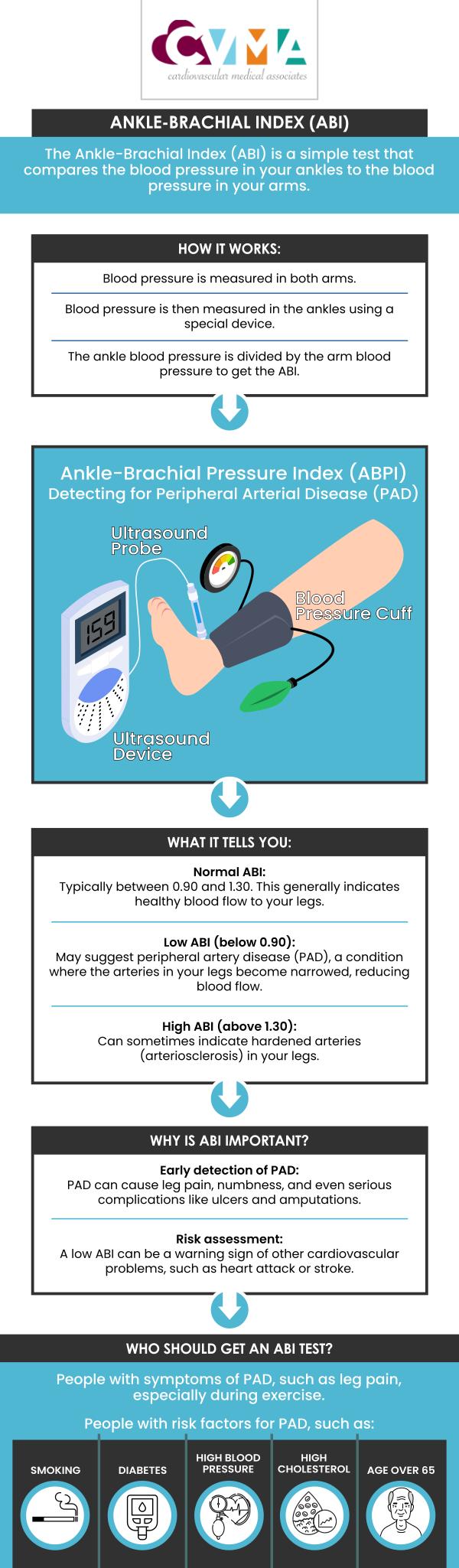
Table of Contents:
What is the ankle-brachial index?
How do you check the ankle-brachial index?
What does a high ankle-brachial index mean?
What is normal ankle-brachial pressure?
How can Dr. Kaushal Tamboli, MD, help you understand your Ankle–Brachial Index (ABI) results?
The ankle-brachial index (ABI) is a test measuring the blood pressure in your ankles and arms. This test is used to assess the blood flow in your lower extremities and detect peripheral artery disease (PAD). During the test, a healthcare professional will use a blood pressure cuff and a Doppler ultrasound device to measure the systolic blood pressure in both your ankles and arms. The ABI is calculated by dividing the systolic blood pressure in the ankle by the systolic blood pressure in the arm.
A normal ABI is usually between 0.9 and 1.4. A result below 0.9 can indicate narrowing or blockage of the arteries in the legs, which is a sign of PAD. This condition can cause leg pain, cramping, and difficulty walking, and it increases the risk of heart attack and stroke. PAD can be detected early through the ABI test and managed through lifestyle changes, medication, and other treatments to improve blood flow in the legs. Regular ABI screenings are essential, especially for individuals at risk of developing PAD due to factors such as diabetes, smoking, high blood pressure, and high cholesterol.
Checking the ankle-brachial index is a straightforward and non-invasive procedure. Here’s what you can expect during the ABI test:
– Preparation – You will be asked to lie down on an examination table in a quiet, comfortable room. You will need to remove your shoes and socks to expose your ankles.
– Blood pressure measurement – The healthcare professional will use a blood pressure cuff and a Doppler ultrasound device. They will place a cuff around your arm and another one around your ankle.
– Doppler ultrasound – A small amount of gel will be applied to the skin over your arteries. The Doppler ultrasound device emits sound waves that reflect off blood cells, enabling the healthcare professional to assess blood flow.
– Reading the measurements – The healthcare professional will record the systolic blood pressure in both your ankles and arms. The ankle-brachial index is then calculated.
The procedure typically takes approximately 15 minutes. The procedure is non-invasive and completely painless. After the test, Dr. Kaushal Tamboli, MD, will interpret the results to assess the blood flow in your legs as well as check for any signs of peripheral artery disease. We will discuss further evaluation and appropriate treatment with you if we detect any abnormalities.
A high ankle-brachial index may sound like a positive thing, but it actually often indicates an underlying health issue. The ABI measures the blood pressure in your ankles compared to your arms, and a higher-than-normal value can point to certain medical conditions:
– Peripheral artery disease (PAD) progression – A high ABI in someone with PAD can indicate advanced disease or worsening circulation in the lower extremities.
– Diabetes complications – In individuals with diabetes, a high ABI can be associated with nerve damage or non-compressible arteries, which affect blood flow to the legs and feet.
– Arterial calcification – A high ABI can be caused by arterial calcification, where the arteries become stiff due to the buildup of calcium deposits. The above factors can lead to inaccurate readings and mask underlying vascular issues.
A normal ankle-brachial index reading typically falls between 0.90 and 1.40. A value of 1.00 means the blood pressure in the ankle is the same as in the arm, indicating excellent blood flow to the lower extremities. An ABI below 0.90 is considered abnormal and can suggest narrowing or blockages in the arteries. A lower ABI value indicates reduced blood flow to the legs, which can cause symptoms such as leg pain, cramping, and weakness.
On the other hand, an ABI above 1.40 is also abnormal and could indicate arterial calcification. It’s essential to have your ABI measured by a cardiovascular professional, especially if you have risk factors for vascular disease, such as diabetes, smoking, high blood pressure, or high cholesterol. Early detection and appropriate management of abnormal ABI values can prevent complications and improve your vascular health.
At Cardiovascular Medical Associates in Downey, CA, Dr. Kaushal Tamboli, MD, offers expert assessment of your ankle–brachial index (ABI) to help detect peripheral artery disease (PAD) and assess overall vascular health. ABI is a simple, non-invasive test that compares the blood pressure in your ankles to that in your arms. A low ABI value can indicate poor circulation and a higher risk of cardiovascular diseases. Dr. Tamboli takes a personalized approach, evaluating your ABI results alongside your medical history and risk factors, such as diabetes, smoking, and high blood pressure.
With this information, Dr. Tamboli can recommend the best treatment options to improve your vascular health. If you’re concerned about your circulation or heart health, Dr. Tamboli’s expertise can provide clarity and guidance for effective management. Learn more about the treatment and diagnosis of the Ankle–Brachial Index. Ankle–brachial index treatment is available at Cardiovascular Medical Associates. For more information, call us. We serve patients from Downey CA, Norwalk CA, Lynwood CA, Cerritos CA, Lakewood CA, Whittier CA and surrounding areas.
Check Out Our 5 Star Reviews





 Send Text
 How May I Help You?